Trusted hydrovac excavation professionals serving Guelph, Fergus, Elora & Wellington County. Free estimates — no obligation.
Get a Free Quote 📞 Call NowFrom routine maintenance to complete installations, we deliver reliable hydrovac excavation solutions across Guelph and surrounding communities.
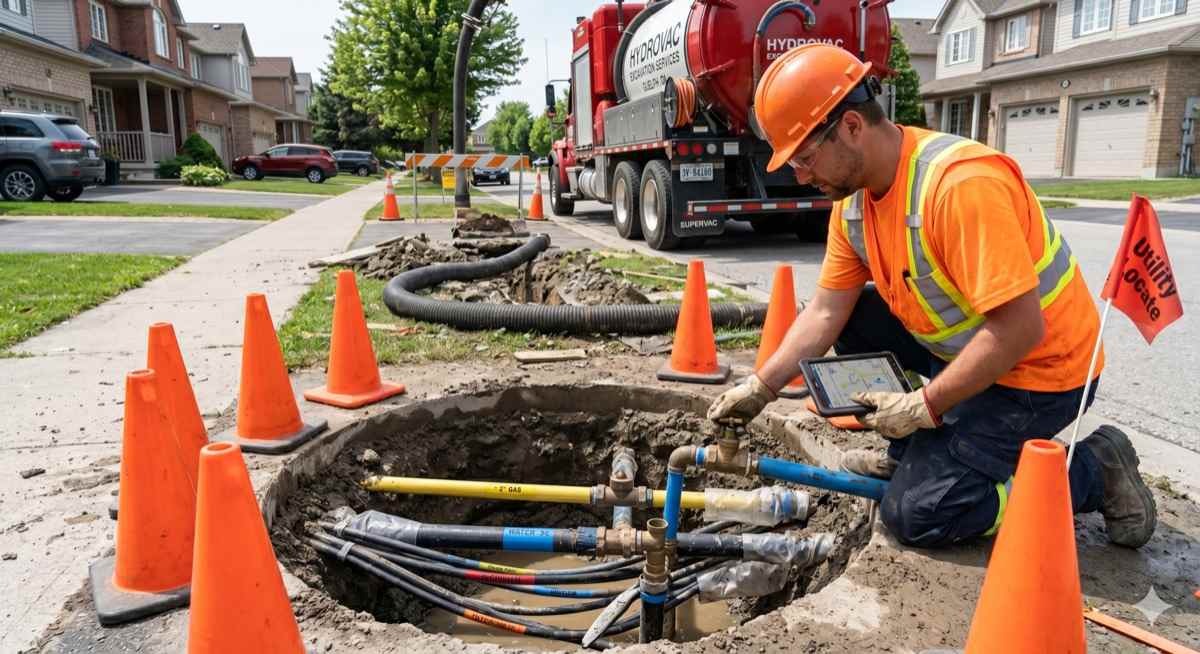
Safe exposure of buried gas, water, and electrical lines before construction begins.
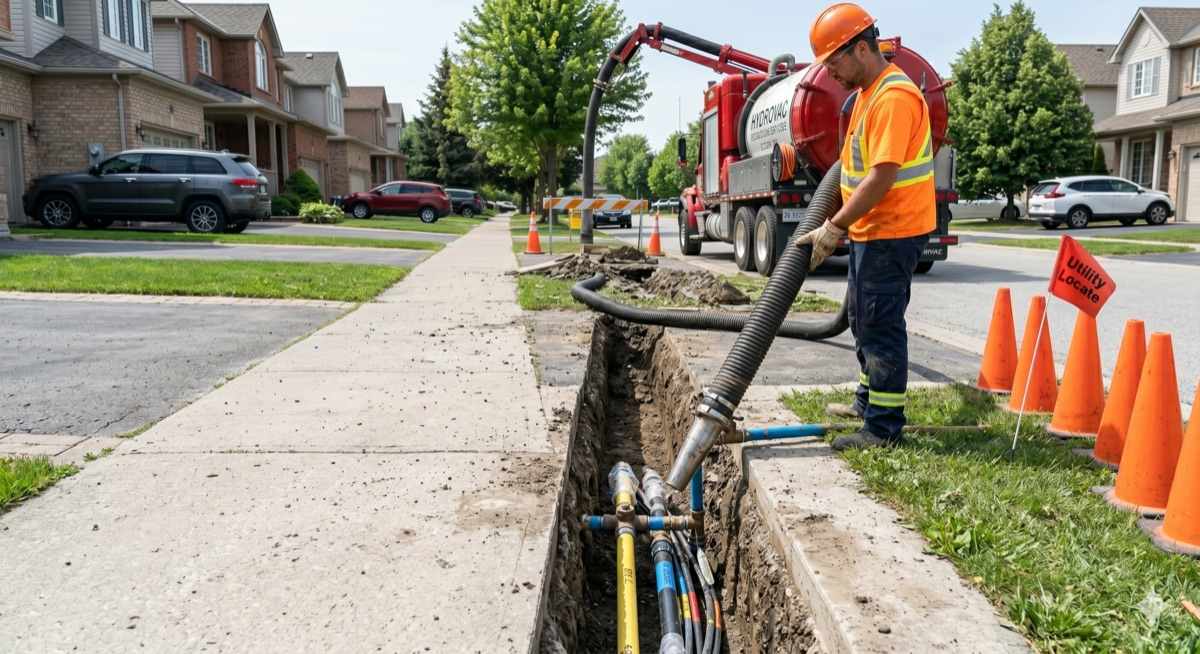
Precise narrow trenches for cables and conduit — no wide open excavation needed.
Quick test holes to verify utility depth and location before any ground disturbance.
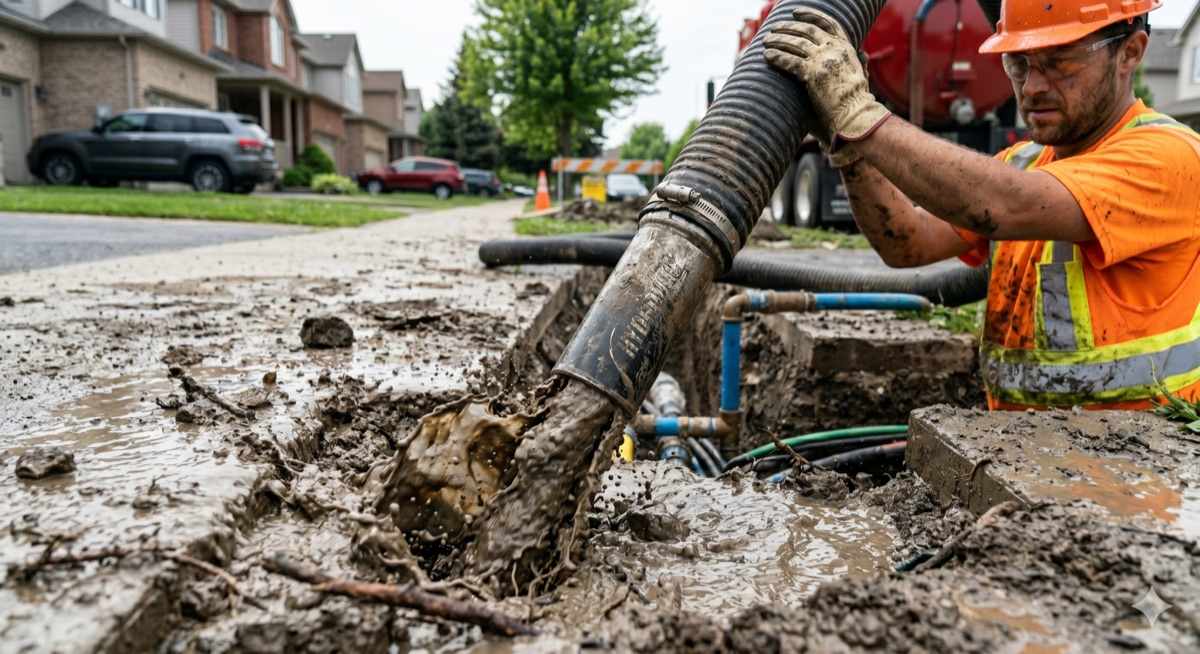
Vacuum excavation removes contaminated soil, gravel, and construction debris efficiently.
Warm water thaws frozen ground so work continues through Guelph winters without delay.
Our compact trucks reach backyards, alleys, and urban sites where standard equipment can't go.
Non-destructive daylighting around buried utilities
Same-week mobilization on most jobs
Site quotes with no obligation
Trucks based in the Guelph area
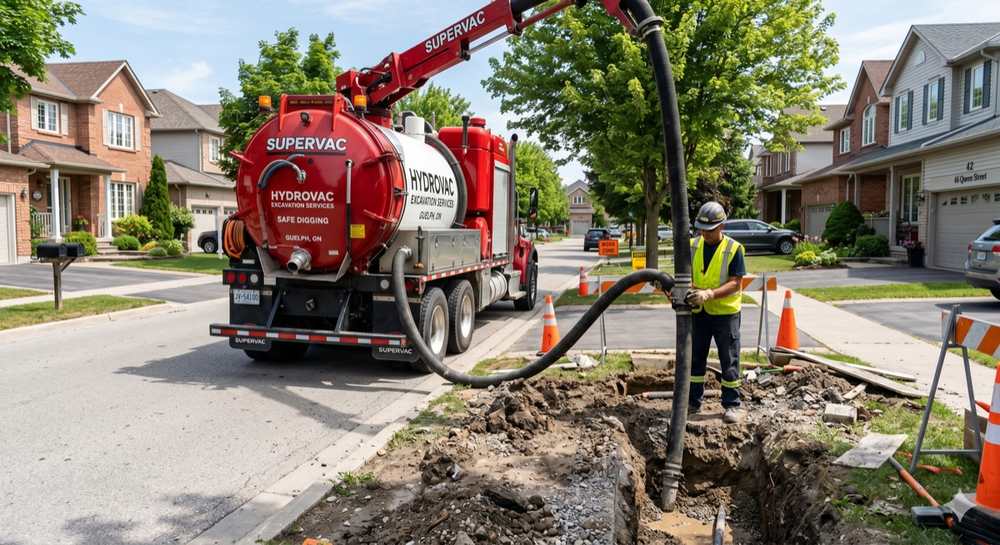
Hydrovac excavation uses high-pressure water to break up soil and a powerful vacuum to extract the resulting slurry into an onboard tank. The result is precise, non-destructive excavation that exposes buried utilities, plant roots, or structural elements without the risk of mechanical damage from a traditional excavator bucket. In urban and suburban Guelph — where underground services are dense and close together — hydrovac is often the only responsible way to dig near buried infrastructure.
The most common hydrovac application in Guelph is daylighting: exposing buried utilities to visually verify their location before conventional excavation begins. Utility locates from Ontario One Call provide an approximate location (within a tolerance zone), but the actual position of older pipes and cables may differ from records. Daylighting confirms exact depth and location before a mechanical excavator bucket comes anywhere near it.
Potholing is a related application — digging a series of small-diameter holes (typically 300–600mm in diameter) to check utility depths and locations along a proposed trench line. This is standard practice before road, sidewalk, and utility installation in Guelph, where the cumulative risk of utility strikes over a long trench run is high.
Slot trenching uses the hydrovac to cut a narrow trench — often for conduit installation, lateral service connections, or irrigation systems — with minimal surface disruption and no risk to adjacent utilities. Unlike a conventional trencher, a hydrovac slot trench can be made to virtually any depth and width in any direction.
Cold weather operations: hydrovac is one of the few excavation methods that works effectively in frozen ground. The high-pressure hot water (heated in the truck) thaws and liquefies frozen soil, making winter excavation possible without the structural risks of mechanical breaking in frozen conditions.
We serve Guelph, Fergus, Elora, Rockwood, Cambridge, and all of Wellington County. Hourly and project-based pricing available.
Get a Free QuoteWe're a local Guelph business. We know the neighbourhoods, the weather, and what Guelph homeowners and businesses need.
We serve: Guelph, Fergus, Elora, Rockwood, Erin, Acton, Puslinch, Cambridge and surrounding Wellington County communities. We also provide hydrovac excavation in Waterloo and across the Kitchener-Waterloo region.
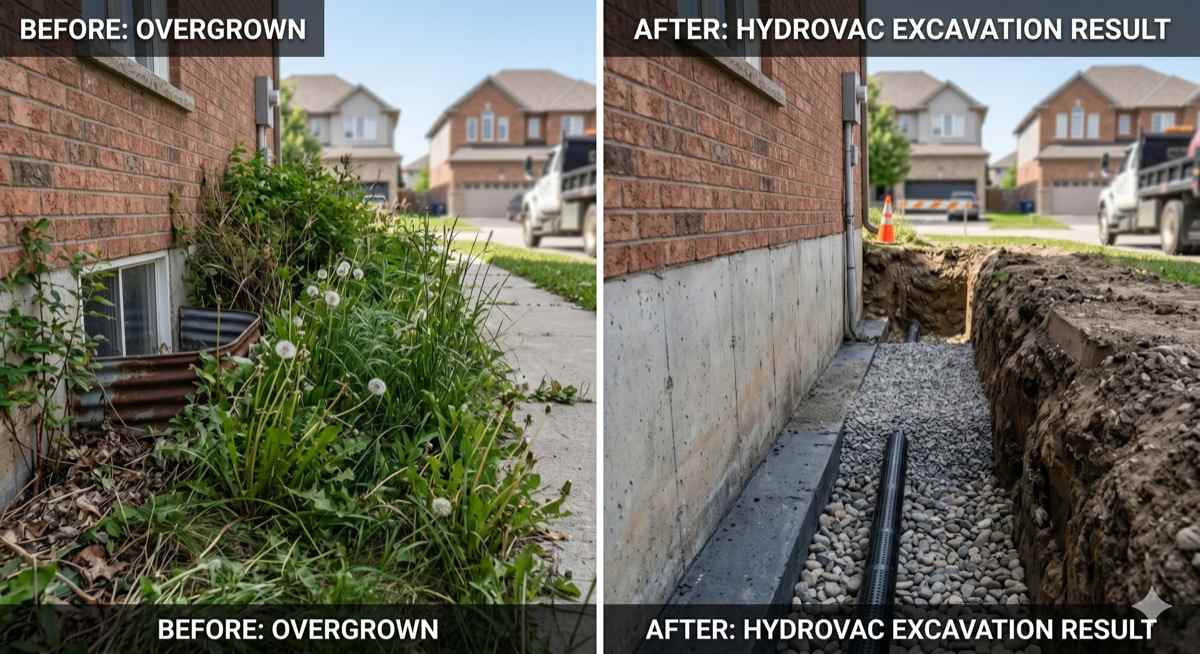
From utility daylighting to full excavation — the kind of work we take on across Guelph and Wellington County.
Answers to the questions Guelph homeowners ask us most.
Hydrovac is typically priced by the hour: $200–$350/hour for the truck and operator, with a 2–3 hour minimum. Half-day and full-day rates are available for larger projects. Remote slurry disposal may add cost if the tank must be driven offsite to empty.
Conventional excavation uses mechanical equipment (backhoe, excavator) which can't distinguish soil from pipes, cables, or roots. Hydrovac uses water and vacuum — it's non-destructive and can be precisely controlled. Near buried utilities, hydrovac eliminates the risk of mechanical strikes. The trade-off is cost: hydrovac is significantly more expensive per cubic metre of soil removed.
Required when: Ontario One Call locate data is uncertain, work is within the tolerance zone of a utility, or job specifications call for non-destructive excavation. Recommended when: excavating near utility lines, exposing existing services before a tie-in, or working near plant roots you want to preserve.
Yes — this is one of hydrovac's major advantages. Heated water in the truck thaws frozen ground, making it one of the few excavation methods that works year-round in Guelph's climate without requiring ground thaw.
Daylighting means exposing a buried utility (water main, gas line, sewer, electrical conduit) by excavating carefully around it to visually confirm its exact location, depth, and condition before any other work proceeds near it.
Primarily general contractors, utility companies, municipalities, and civil contractors for infrastructure projects. Residential applications include exposing water service lines for repair or replacement, exposing foundation drains, and locating sanitary laterals.
Fill out the form below and we'll get back to you within one business day.